
Our team spent significant time curating trustworthy external resources to share with our users. These resources highlight the Hub’s focus areas in climate finance, transition finance and inclusive finance, alongside other topics such as nature finance and blue finance. Curated external data portals are also available as supplemental material to your research, studies or business.
Resource Library
| Title | Use filters above to search | Link to resource | Publication year | Type | Topic | Geography | Link | added by | Notes | Extra |
|---|---|---|---|---|---|---|---|---|---|---|
| State of Finance for Nature | Published by the UN Environment Program, this report examines the current state of finance for nature conservation and sustainable development. The report highlights the critical role of financial flows in addressing global environmental challenges and protecting biodiversity. It provides an overview of the current financial landscape, including public and private investments, international funding mechanisms, and innovative financial instruments. The report emphasizes the need for increased investment in nature-based solutions, such as ecosystem restoration, sustainable agriculture, and biodiversity conservation, to achieve global sustainability goals. It identifies key barriers and challenges in mobilizing finance for nature and proposes policy recommendations and actions to overcome them. The report also showcases successful case studies and best practices from around the world to demonstrate the positive impact of nature-focused finance initiatives. |  |
2022 | Reports & technical documents | Nature & Biodiversity | International | https://www.unep.org/resources/report/state-finance-nature-2022 | Basma | ||
| Integrating Nature: The Case for Action on Nature-Related Financial Risks | This paper, published by the Institute for Sustainability Leadership at the University of Cambridge, presents a compelling argument for addressing nature-related financial risks and integrating nature into financial decision-making. The document emphasizes the importance of recognizing the dependence of financial systems and economies on nature and the potential risks posed by biodiversity loss and ecosystem degradation. It highlights the need for proactive measures to assess, disclose, and manage nature-related risks in investment portfolios, lending practices, and insurance underwriting. The document also outlines the potential benefits of integrating nature into financial systems, including the promotion of long-term resilience, value creation, and alignment with sustainability goals. It calls for collaboration among financial institutions, policymakers, and regulators to develop frameworks, metrics, and tools that enable the incorporation of nature-related considerations into decision-making processes. |  |
2022 | Reports & technical documents | Nature & Biodiversity | International | https://www.cisl.cam.ac.uk/files/cisl_nature-related_financial_risks_report_2022.pdf | Basma | ||
| Global Nature Markets Landscaping Study | Published by the Taskforce on Nature Markets, this paper provides a comprehensive analysis of the market-based approaches and financial mechanisms that support the conservation and sustainable use of nature. The paper examines various nature-based solutions, such as carbon markets, biodiversity offsetting, and ecosystem services trading, and assesses their effectiveness in driving conservation outcomes. It explores the potential for scaling up these mechanisms to mobilize private sector investment in nature conservation. The paper also highlights the importance of integrating social and environmental considerations into market-based approaches to ensure equitable and sustainable outcomes. It provides insights into the current landscape of nature markets, including challenges, opportunities, and best practices from different regions. |  |
2022 | Reports & technical documents | Nature & Biodiversity | International | https://www.naturemarkets.net/publications/global-nature-markets-landscaping-study | Basma | ||
| Central Banking and Supervision in the Biosphere: An Agenda for Action on Biodiversity Loss, Financial Risk and System Stability | This Network for Greening the Financial System publication calls for the integration of biodiversity considerations into central banking and financial supervision practices. The report highlights the urgent need to address the risks associated with biodiversity loss, recognizing its potential impact on financial stability and economic systems. It provides recommendations for central banks and financial regulators to incorporate biodiversity-related risks into their mandates, frameworks, and decision-making processes. The report emphasizes the importance of collecting and analyzing data on biodiversity-related risks, promoting transparency and disclosure, and developing tools and methodologies to assess and manage these risks. It also underscores the role of central banks in driving sustainable finance and supporting the transition towards a nature-positive economy. |  |
2022 | Reports & technical documents | Nature & Biodiversity | International | https://www.ngfs.net/en/central-banking-and-supervision-biosphere-agenda-action-biodiversity-loss-financial-risk-and-system | Basma | please dounble check if link to image is correct | |
| The Post-2020 Global Biodiversity Framework and What It Means for Business | Published by the World Economic Forum, this white paper explores the implications of the post-2020 global biodiversity framework on business operations and strategies. The report highlights the urgent need for collective action to address biodiversity loss and protect ecosystems for sustainable development. It provides an overview of the key elements and goals of the framework, including the conservation and restoration of biodiversity, sustainable use of natural resources, and mainstreaming biodiversity considerations into all sectors of the economy. The report emphasizes the role of businesses in driving positive change and highlights the business opportunities that arise from integrating biodiversity considerations into corporate strategies. It discusses the importance of engaging in sustainable sourcing practices, implementing biodiversity-friendly policies, and adopting responsible business practices that minimize negative impacts on ecosystems. The report also emphasizes the need for collaboration between businesses, governments, and civil society to achieve the goals of the post-2020 biodiversity framework. |  |
2022 | Explainers & Guidelines | Nature & Biodiversity | International | https://www.weforum.org/whitepapers/the-post-2020-global-biodiversity-framework-and-what-it-means-for-business/ | Basma | ||
| Biodiversity Finance Stories from the Field | Published by UNDP and the Global Biodiversity Initiative, this report presents a collection of real-life case studies that highlight innovative and effective approaches to financing biodiversity conservation and sustainable use. The document showcases various projects and initiatives from different regions around the world, illustrating the diverse range of financial mechanisms and strategies employed to support biodiversity conservation efforts. The case studies cover topics such as conservation finance, payment for ecosystem services, sustainable tourism, community-led conservation, and public-private partnerships. Each story provides insights into the challenges faced, the financial solutions implemented, and the positive impacts achieved in terms of biodiversity conservation, ecosystem restoration, and community well-being. | 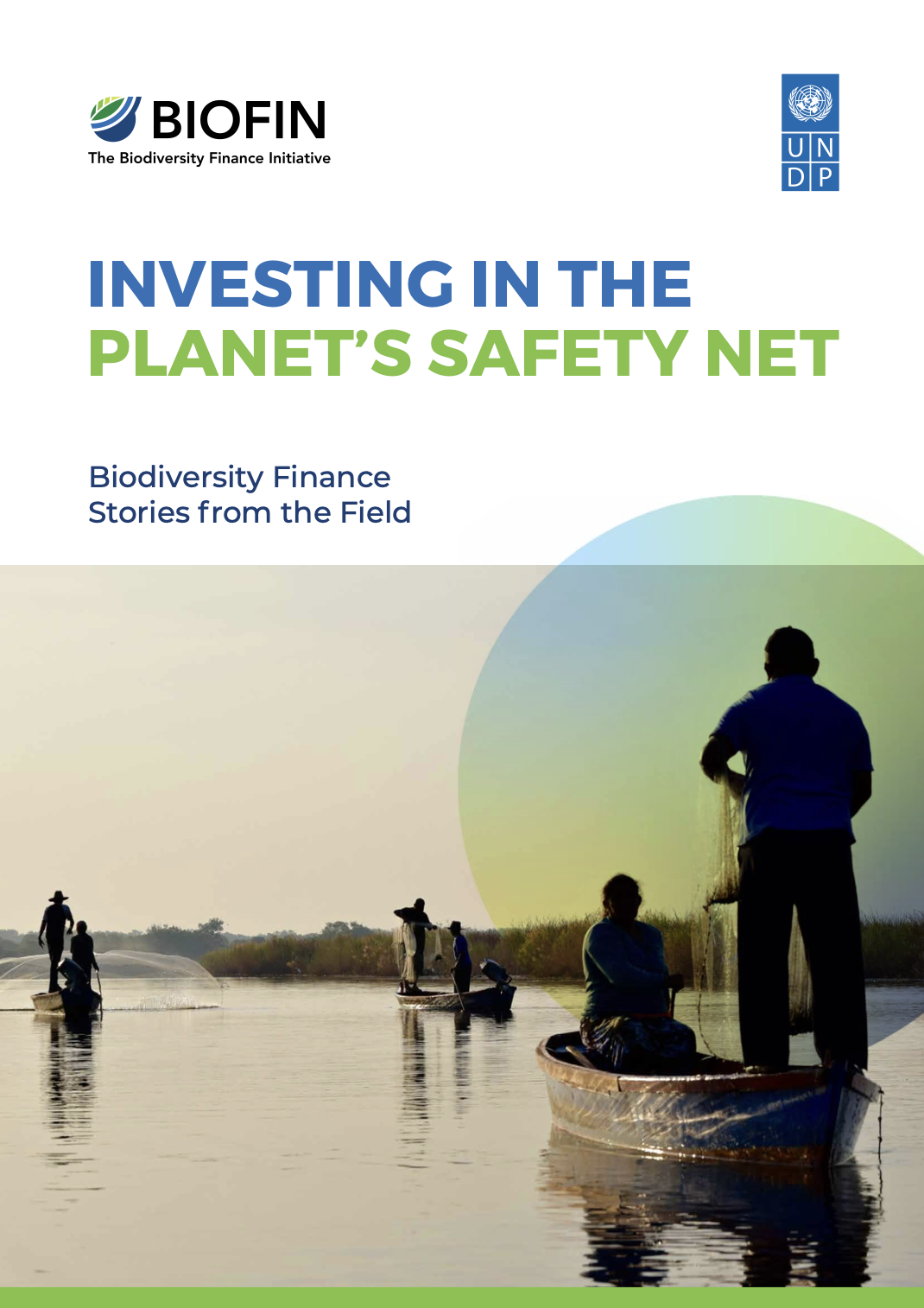 |
2022 | Case studies | Nature & Biodiversity | International | https://live-global-conference.pantheonsite.io/wp-content/uploads/2022/12/Planetary-Safety-Net.pdf | Jenny | ||
| Financing Nature as a Solution | This publication by the European Environment Agency, explores the potential of financial mechanisms to support and incentivize nature-based solutions for environmental challenges. The document highlights the importance of valuing and investing in nature as a means to address climate change, biodiversity loss, and other sustainability issues. It examines various financing approaches such as green bonds, impact investing, and payment for ecosystem services, and their application in funding nature-based projects. The report emphasizes the need for innovative financial instruments and partnerships to mobilize private capital toward nature conservation and restoration efforts. It also addresses the challenges and opportunities in scaling up nature-based financing, including the importance of robust measurement, reporting, and verification frameworks. |  |
2022 | Research briefs | Nature & Biodiversity | International | https://www.eea.europa.eu/publications/financing-nature-as-a-solution | Jenny | ||
| Overview of Climate Change, the Environment and Innovative Finance in Emerging and Developing Economies | This publication by the Asian Development Bank provides a comprehensive overview of the intersection between climate change, environmental challenges, and innovative finance in emerging and developing economies. The document examines the unique environmental and climate-related issues faced by developing countries, such as vulnerability to extreme weather events, biodiversity loss, deforestation, and pollution. It explores the role of innovative finance mechanisms, including climate funds, green bonds, and public-private partnerships, in mobilizing resources to address these challenges and drive sustainable development. The document also discusses the importance of international cooperation, capacity-building, and knowledge sharing to support the transition towards low-carbon, resilient economies in emerging and developing countries. |  |
2022 | Reports & technical documents | Climate | Emerging & Developing Markets | https://www.adb.org/publications/an-overview-of-climate-change-the-environment-and-innovative-finance-in-emerging-and-developing-economies | Jenny | ||
| Scaling Investing in Nature: the Next Critical Frontier | Published by the World Economic Forum, this white paper highlights the urgent need for increased investment in nature conservation and restoration to address pressing environmental challenges. The paper emphasizes that traditional conservation funding sources are insufficient to meet the scale and complexity of the current biodiversity and climate crises. It advocates for scaling up investment in nature by mobilizing private capital and leveraging innovative financing mechanisms. The paper explores various nature-based investment opportunities, including sustainable agriculture, forestry, and marine conservation projects, and highlights their potential for delivering both financial returns and positive environmental impact. It also addresses the barriers and challenges to scaling nature-based investing, such as the lack of standardized metrics, regulatory barriers, and limited awareness among investors. The paper provides recommendations and case studies to guide policymakers, financial institutions, and investors in unlocking the potential of nature-based investments. |  |
2022 | Reports & technical documents | Nature & Biodiversity | International | https://www3.weforum.org/docs/WEF_Scaling_Investments_in_Nature_2022.pdf | Jenny | ||
| How Finance Can Support a Just Transition at the Interface of Action on Climate and Biodiversity | Published by The Grantham Research Institute on Climate Change and the Environment and The Centre for Climate Change Economics and Policy (CCCEP), this report explores the interconnectedness of climate change and biodiversity loss and emphasizes the role of finance in driving a just transition toward a sustainable future. The report highlights the need to align financial flows with climate and biodiversity objectives to address these twin crises effectively. It explores various financial mechanisms and tools that can support the transition, including sustainable finance frameworks, impact investing, and green bonds. The report emphasizes the importance of ensuring that financial interventions promote social equity, inclusivity, and the rights of marginalized communities, particularly in sectors heavily dependent on natural resources. It also highlights the role of financial institutions, governments, and policymakers in creating enabling environments, implementing effective regulations, and encouraging transparency and accountability in finance. |  |
2022 | Reports & technical documents | Nature & Biodiversity, Climate | International | https://www.lse.ac.uk/granthaminstitute/wp-content/uploads/2022/08/Just_Nature_How_finance_can_support_a_just_transition_at_the_interface_of_action_on_climate_and_biodiversity.pdf | Jenny | ||
| The Economic Case for Nature | This World Bank publication presents a compelling argument for the economic value of nature and the importance of integrating it into decision-making processes. The publication highlights that healthy ecosystems and biodiversity provide essential services and benefits to human societies, such as clean air and water, food security, climate regulation, and recreational opportunities. It emphasizes that the degradation and loss of natural capital have significant economic costs, including reduced productivity, increased healthcare expenses, and diminished livelihoods. The document provides evidence-based examples and case studies that demonstrate the economic benefits of investing in nature conservation and restoration. It explores various economic tools and approaches, such as natural capital accounting and ecosystem valuation, to quantify and incorporate the value of nature into policy-making and business strategies. It also highlights the potential for nature-based solutions to address pressing global challenges, including climate change and sustainable development. |  |
2021 | Research briefs | Nature & Biodiversity | International | https://www.worldbank.org/en/topic/environment/publication/the-economic-case-for-nature | Basma | ||
| Biodiversity, Natural Capital, and the Economy: A Policy Guide for Finance, Economic, and Environmental Ministers | Published by the OECD, this policy paper offers a comprehensive guide that highlights the importance of biodiversity and natural capital in the context of economic development and provides policy recommendations for government ministers across finance, economic, and environmental sectors. The paper emphasizes the critical role of biodiversity in sustaining ecosystems, providing essential services, and contributing to economic growth and human well-being. It explores the links between biodiversity, natural capital, and various economic sectors, including agriculture, forestry, fisheries, tourism, and infrastructure development. The paper offers practical policy suggestions to integrate biodiversity considerations into economic decision-making, such as incorporating natural capital accounting, establishing economic incentives for biodiversity conservation, promoting sustainable business practices, and fostering public-private partnerships. It also emphasizes the need for international cooperation and collaboration to address biodiversity loss and promote sustainable economic development. |  |
2021 | Explainers & Guidelines | Nature & Biodiversity | International | https://www.oecd.org/environment/biodiversity-natural-capital-and-the-economy-1a1ae114-en.htm | Basma | ||
| The Economics of Biodiversity (abridged version) | This report is an abridged version of a longer review that provides a comprehensive review of how economics and ecology come together. The original report was prepared in 2019 at the request of the UK Government. This report explains in detail the economics of biodiversity and is written in simple terms for a "concerned citizen." It presents evidence and analysis to demonstrate the economic risks and opportunities associated with biodiversity loss, and proposes a transformative approach that integrates nature into economic and financial decision-making. By recognizing the economic value of biodiversity and adopting nature-positive policies, the report argues that we can achieve both ecological sustainability and economic prosperity. Finally, the report showcases criteria for choosing investment portfolios, rules for comparing alternative asset portfolios, and the practices that sustainable companies should follow. |  |
2021 | Reports & technical documents | Nature & Biodiversity | International | https://assets.publishing.service.gov.uk/government/uploads/system/uploads/attachment_data/file/957292/Dasgupta_Review_-_Abridged_Version.pdf | Basma | ||
| The Little Book of Investing in Nature | This concise book explores investing in nature as a strategy to achieve both financial returns and environmental conservation. The book highlights the growing recognition of the economic value of Nature-based Solutions (NbS) and sustainable practices. It provides insights into various investment opportunities, such as conservation finance, sustainable agriculture, renewable energy, and eco-tourism. The book emphasizes the potential benefits of investing in nature, including risk diversification, positive environmental impact, and long-term value creation. It also discusses the importance of incorporating environmental, social, and governance (ESG) factors into investment decision-making. |  |
2021 | Reports & technical documents | Nature & Biodiversity | International | https://globalcanopy.org/wp-content/uploads/2021/07/LBIN_2020_RGB_ENG.pdf | Basma | Should this be a handbook or book under the Type column? | |
| Scaling Up Sustainable Investment | This publication by the Asian Development Bank explores the potential and pathways to increase sustainable investment on a global scale. The document highlights the importance of mobilizing private capital towards sustainable projects and initiatives that address environmental, social, and governance (ESG) issues. It discusses the key drivers and challenges of scaling up sustainable investment, including the need for clear frameworks and standards, investor demand, policy support, and transparency. The document also explores various approaches and strategies to accelerate the flow of sustainable investment, such as impact investing, green bonds, and sustainable finance initiatives. It emphasizes the role of collaboration among stakeholders, including governments, financial institutions, businesses, and civil society, to create an enabling environment and overcome barriers to scaling up sustainable investment. |  |
2021 | Reports & technical documents | Climate | Emerging & Developing Markets | https://www.adb.org/publications/scaling-sustainable-investment-blockchain-based-project-bonds | Jenny | ||
| Public International Funding for Nature-Based Solutions for Adaptation | Published by the World Resources Institute, this working paper focuses on the availability and allocation of public international funding for Nature-based Solutions (NbS) to address climate change adaptation challenges. The paper highlights the growing recognition of NbS as effective and sustainable approaches to building resilience and mitigating climate impacts. It provides an overview of the funding landscape, including the sources and mechanisms through which public international funding is mobilized and disbursed for NbS projects. The paper explores the key funding instruments and initiatives, such as climate funds and multilateral development banks, that prioritize NbS as a means to support adaptation efforts. It examines the criteria and priorities for funding allocation, as well as the challenges and opportunities associated with accessing and utilizing public international funding for NbS. The document also emphasizes the importance of coordination and collaboration among stakeholders to maximize the impact of available funding and ensure effective implementation of NbS projects. |  |
2021 | Reports & technical documents | Nature & Biodiversity | International | https://www.wri.org/research/public-international-funding-nature-based-solutions-adaptation-landscape-assessment | Jenny | ||
| How Can Financial Services Protect and Restore Biodiversity | Published by EY, this paper examines the role of financial services in safeguarding and restoring biodiversity. The report emphasizes the importance of biodiversity for the stability and resilience of ecosystems and highlights the risks associated with biodiversity loss. It explores how financial institutions can integrate biodiversity considerations into their operations, investment decisions, and risk management practices. The report identifies various strategies, including incorporating biodiversity metrics into investment analysis, supporting sustainable agriculture and forestry practices, and promoting the development of biodiversity-focused financial products. It also emphasizes the need for collaboration among financial institutions, policymakers, and other stakeholders to drive collective action in protecting and restoring biodiversity. |  |
2021 | Research briefs | Nature & Biodiversity | International | https://www.ey.com/en_gl/financial-services-technical-resources/how-can-financial-services-protect-and-restore-biodiversity | Jenny | ||
| Financing Nature: Closing the Global Biodiversity Financing Gap | Published by the Paulson Institute in partnership with The Nature Conservancy and the Cornell Atkinson Center for Sustainability, this report highlights the urgent need to address the global biodiversity financing gap and provides recommendations for increasing financial support for biodiversity conservation and sustainable use. The report emphasizes that current funding levels for biodiversity are inadequate to meet the growing challenges of biodiversity loss and ecosystem degradation. It examines the various sources of biodiversity finance, including public funding, private investments, and innovative financial mechanisms. The report identifies barriers and challenges in mobilizing financial resources for biodiversity, such as the lack of awareness, limited funding instruments, and the need for improved coordination among stakeholders. It proposes a range of strategies to bridge the financing gap, including scaling up public funding, leveraging private sector investments, promoting biodiversity-friendly financial products and services, and strengthening international cooperation and partnerships. The report also highlights the importance of integrating biodiversity considerations into economic decision-making and valuing the ecosystem services provided by nature. | 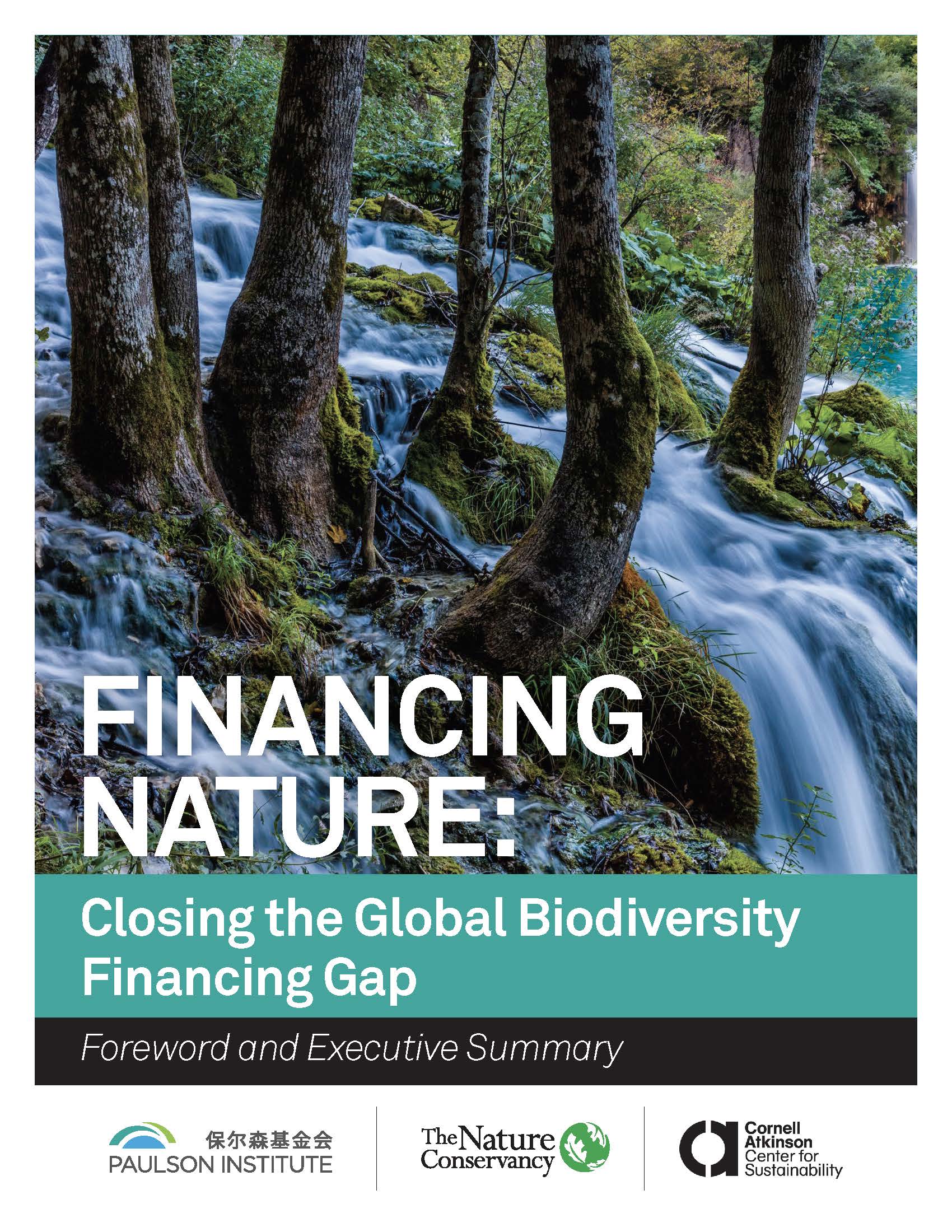 |
2020 | Reports & technical documents | Nature & Biodiversity | International | https://www.paulsoninstitute.org/conservation/financing-nature-report/ | Basma | there are 2 PDF links on this page. if we go with upload, then just use teh executive summary file. | |
| Fintech for Biodiversity: A Global Landscape | Published by the Green Digital Finance Alliance, this report provides an overview of the emerging field of financial technology (fintech) and its potential to drive biodiversity conservation and sustainable development. The report explores the intersection of fintech and biodiversity, highlighting the innovative solutions and digital platforms that are leveraging financial technology to address biodiversity-related challenges. It examines various fintech applications, including crowdfunding platforms, impact investing tools, digital payment systems, and blockchain-based solutions, and their potential to mobilize financial resources, facilitate transparency, and incentivize sustainable practices. The report also discusses the importance of collaboration between fintech innovators, conservation organizations, policymakers, and financial institutions to scale up fintech solutions for biodiversity. |  |
2020 | Reports & technical documents | Nature & Biodiversity | International | https://www.sustainablefinance.ch/upload/rm/fintech-for-biodiversity-final-30-32020-1.pdf?_=1586152773749 | Basma | i replaced the previous links for this document by going to orgininal publisher (it was previous from a resources page of anotehr organization). However, i'm not sure about the link to the image that i put there. also link to title need to be cheked. I followed same format but not sure it will work. | |
| Mobilizing Private Finance for Nature | This paper explores strategies and mechanisms to attract private investment and financing for nature conservation and sustainable natural resource management. The report highlights the importance of leveraging private capital to address pressing environmental challenges and achieve biodiversity conservation goals. It identifies innovative financing models, such as green bonds, impact investing, blended finance, and nature-based solutions, that can mobilize private funds for nature-related projects. The report also discusses the role of policy and regulatory frameworks, risk mitigation measures, and capacity-building efforts in creating an enabling environment for private finance. |  |
2020 | Research briefs | Nature & Biodiversity | International | https://thedocs.worldbank.org/en/doc/916781601304630850-0120022020/original/FinanceforNature28Sepwebversion.pdf | Jenny | ||
| Comprehensive Overview of Global Biodiversity Finance | Published by the OECD, this report provides an in-depth analysis of the financial flows and mechanisms related to biodiversity conservation and sustainable use on a global scale. The report offers a comprehensive overview of the current state of biodiversity finance, including public funding, private investments, and international financial mechanisms. It examines the sources, instruments, and channels through which funds are mobilized and allocated for biodiversity-related activities. The report also highlights the gaps and challenges in biodiversity finance, such as the insufficient allocation of funds, limited access to finance for developing countries, and the need for innovative financing solutions. It explores the role of various stakeholders, including governments, multilateral organizations, financial institutions, and civil society, in mobilizing and directing finance toward biodiversity conservation. The report concludes with recommendations for enhancing biodiversity finance, including the importance of mainstreaming biodiversity into financial decision-making, improving transparency and accountability, and scaling up financial resources. |  |
2020 | Research briefs | Nature & Biodiversity | International | https://www.oecd.org/environment/resources/biodiversity/report-a-comprehensive-overview-of-global-biodiversity-finance.pdf | Jenny | ||
| Biodiversity: Finance and the Economic/Business Case for Action | Prepared by the OECD for the May 2019 G7 Environment Ministers' Meeting, this report explores the economic and business rationale for investing in biodiversity conservation and sustainable use. The report highlights the critical role of biodiversity in supporting ecosystems, providing essential services, and contributing to economic prosperity. It emphasizes that biodiversity loss poses significant risks and challenges to businesses, including impacts on supply chains, market access, and reputation. The report presents case studies and examples of businesses that have integrated biodiversity considerations into their operations, showcasing the potential benefits, such as cost savings, innovation, and enhanced brand value. It also outlines various financing mechanisms and approaches that can support biodiversity conservation and sustainable business practices, including biodiversity offsets, green bonds, and impact investing. The report underscores the need for collaboration between governments, businesses, financial institutions, and civil society to mobilize finance, develop supportive policies, and implement effective biodiversity strategies. |  |
2019 | Research briefs | Nature & Biodiversity | International | https://www.oecd.org/environment/resources/biodiversity/G7-report-Biodiversity-Finance-and-the-Economic-and-Business-Case-for-Action.pdf | Jenny | ||
| Flowing Investment to Scale Clean Technology | This report explores strategies and mechanisms to attract investment and facilitate the scaling up of clean technologies. It examines various financial instruments, such as venture capital, private equity, impact investing, and government funding programs, that can be leveraged to mobilize capital for clean technology projects. The report also discusses the importance of creating an enabling policy and regulatory environment that fosters innovation and collaboration between the public and private sectors to unlock investment opportunities. |  |
2019 | Reports & technical documents | Cleantech | Canada | https://delphi.ca/wp-content/uploads/2019/09/Flowing-Investment-to-Scale-Cleantech.pdf | Jenny | ||
| Climate finance report: global synthesis report on climate finance | This report provides a comprehensive overview of climate finance flows at the global level. The report analyzes the sources, channels, and trends in climate finance, with a focus on the mobilization of funds to address climate change mitigation and adaptation efforts. It examines the financial support provided by developed countries to developing countries, including both public and private finance, and assesses the progress made toward meeting climate finance commitments. The report also highlights the challenges and opportunities in scaling up climate finance, promoting transparency, and ensuring the effective and equitable use of funds. |  |
2022 | Reports & technical documents | Climate | International | https://www.climate-chance.org/en/synthesis-report/climate-finance-report-2022/ | Jenny | ||
| Climate transparency report 2022 | This report provides an in-depth analysis of the progress made by countries in implementing their climate commitments and the transparency of their actions. The report assesses the efforts of countries in terms of greenhouse gas emissions, climate policies, and climate finance. It highlights the need for greater ambition and accelerated action to meet the goals of the Paris Agreement and limit global warming to well below 2ºC. The report also highlights the importance of transparency in tracking and evaluating climate actions, enabling effective monitoring, reporting, and verification of progress. It offers insights into the strengths and weaknesses of countries' climate policies and provides recommendations to enhance transparency and accountability in climate action. |  |
2022 | Reports & technical documents | Climate | International | https://www.climate-transparency.org/g20-climate-performance/g20report2022 | Jenny | ||
| Climate Finance: A Decade of Data | Published by the Climate Policy Initiative, this report provides an extensive analysis of climate finance trends over the past decade. The report examines the financial flows and investments directed toward climate change mitigation and adaptation efforts, with a focus on both public and private sources of finance. It explores the geographic distribution of climate finance, the sectors and activities targeted, and the financial instruments utilized. The report also assesses the progress made towards mobilizing the necessary funds to address climate change and achieve the goals of the Paris Agreement. It highlights the challenges and opportunities in scaling up climate finance, improving its effectiveness, and ensuring transparency and accountability in financial flows. |  |
2022 | Reports & technical documents | Climate | International | https://www.climatepolicyinitiative.org/publication/global-landscape-of-climate-finance-a-decade-of-data/ | Jenny | ||
| Climate Finance Provided and Mobilized by Developed Countries 2016-2020 | Published by the OECD, this report evaluates the financial support and mobilization efforts of developed countries in addressing climate change during the period from 2016 to 2020. The report analyzes the financial flows from developed countries, including public finance, private investments, and international climate finance mechanisms. It provides an overview of the sources, instruments, and channels through which climate finance is provided and mobilized. The report assesses the progress made by developed countries in meeting their climate finance commitments and identifies areas where additional efforts are needed. It highlights the importance of increasing financial support to developing countries, particularly the most vulnerable ones, to enhance their capacity for climate change mitigation and adaptation. The report also emphasizes the need for transparency, accountability, and effective tracking of climate finance to ensure its efficient and targeted use. |  |
2022 | Reports & technical documents | Climate | Emerging & Developing Markets | https://www.oecd.org/environment/climate-finance-provided-and-mobilised-by-developed-countries-in-2016-2020-286dae5d-en.htm | Jenny | ||
| Joint Report on Multilateral Development Banks' Climate Finance | This report is a collaborative effort by multiple Multilateral Development Banks (MDBs) to provide an overview of their climate finance activities and contributions. The report outlines the financial commitments, investments, and initiatives undertaken by these banks to address climate change and support the transition to a low-carbon and climate-resilient future. It highlights the role of multilateral development banks in mobilizing climate finance, leveraging private sector investments, and supporting developing countries in implementing climate-related projects and programs. The report covers a wide range of sectors, including renewable energy, sustainable infrastructure, adaptation measures, and capacity-building efforts. By consolidating the climate finance efforts of these institutions, the report aims to enhance transparency, accountability, and coordination in addressing climate change challenges at a global scale. |  |
2020 | Reports & technical documents | Climate | International | https://thedocs.worldbank.org/en/doc/9234bfc633439d0172f6a6eb8df1b881-0020012021/original/2020-Joint-MDB-report-on-climate-finance-Report-final-web.pdf | Jenny | ||
| Climate Finance Provided and Mobilized by Developed Countries 2013-2019 | Published by the OECD, this report analyzes the financial contributions and mobilization efforts of developed countries in supporting climate change mitigation and adaptation activities in developing nations. The report examines the financial flows from developed countries, including public finance, private investments, and international climate finance mechanisms. It provides an overview of the different sources, instruments, and channels through which climate finance is provided and mobilized. The report highlights the progress made by developed countries in meeting their climate finance commitments, while also identifying gaps and challenges in achieving the agreed targets. It emphasizes the need for increased financial support, particularly to the most vulnerable countries, to enable them to address the impacts of climate change and transition to low-carbon and climate-resilient economies. The report also underscores the importance of transparency, accountability, and tracking the impact of climate finance in achieving global climate goals. |  |
2021 | Reports & technical documents | Climate | Emerging & Developing Markets | https://www.oecd.org/env/climate-finance-provided-and-mobilised-by-developed-countries-aggregate-trends-updated-with-2019-data-03590fb7-en.htm | Jenny | ||
| Financing Clean Energy Transitions in Emerging and Developing Economies | Published by the International Energy Agency (IEA), this report explores the challenges and opportunities associated with financing the transition to clean energy in emerging and developing economies. The report highlights the urgent need for these economies to shift from fossil fuel dependency to low-carbon, sustainable energy sources to address climate change and promote sustainable development. It examines the barriers that hinder clean energy financing, such as limited access to capital, high investment costs, and policy and regulatory uncertainties. The report also explores various financing mechanisms, including public and private sector investments, international climate funds, and innovative financial instruments, to mobilize the necessary resources for clean energy transitions. It emphasizes the importance of tailored financial solutions, capacity building, and policy frameworks to attract investment, promote energy access, and drive technological innovation in emerging and developing economies. |  |
2021 | Reports & technical documents | Energy Transition | Emerging & Developing Markets | https://www.iea.org/events/financing-clean-energy-transitions-in-emerging-and-developing-economies | Jenny | This both a report and a video. Which one should we showcase under the Type column? | |
| Delivering on the $100B Climate Finance Commitment and Transforming Climate Finance | This report published by the Independent Expert Group on Climate Finance focuses on the commitment made by developed countries to mobilize $100 billion annually in climate finance to support developing nations in their climate change mitigation and adaptation efforts. The report assesses progress towards meeting this commitment and provides recommendations for transforming climate finance to ensure its effectiveness and impact. It highlights the need for increased transparency, predictability, and accountability in climate finance flows. The report emphasizes the importance of scaling up public funding, leveraging private sector investments, and promoting innovative financial instruments to bridge the financing gap. It calls for a balanced approach that addresses both mitigation and adaptation needs, with a focus on supporting vulnerable communities and sectors. The report also emphasizes the importance of building capacity, enhancing local ownership, and strengthening international cooperation to maximize the impact of climate finance. |  |
2020 | Reports & technical documents | Climate | Emerging & Developing Markets | https://www.un.org/sites/un2.un.org/files/2020/12/100_billion_climate_finance_report.pdf | Jenny | ||
| The Global Energy Crisis has Triggered Unprecedented Momentum Behind Renewables | This report published by the International Energy Agency (IEA) provides a comprehensive analysis of the renewable energy market and its recent developments. The report highlights the significant growth of renewable energy sources, such as solar and wind, in the global energy mix. It explores key trends and drivers behind this growth, including declining costs, supportive policies, and increasing environmental awareness. The report also examines the implications of renewable energy expansion on energy systems, electricity markets, and climate change mitigation efforts. It provides insights into the various challenges and opportunities associated with scaling up renewables, including grid integration, storage technologies, and policy frameworks. The report concludes by outlining key recommendations for policymakers and stakeholders to accelerate the deployment of renewables and achieve a sustainable and resilient energy future. |  |
2022 | Visualizations & infographics | Energy Transition | International | https://www.iea.org/spotlights/the-global-energy-crisis-has-triggered-unprecedented-momentum-behind-renewables | Jenny | ||
| Engaging Canada's Blue Economy Strategy: What We Heard | Published by Fisheries and Oceans Canada, this summary document captures the key findings and feedback gathered from a 2019 consultation and engagement related to Canada's Blue Economy Strategy. The document highlights the perspectives, priorities, and recommendations expressed by stakeholders, including industry representatives, Indigenous communities, government agencies, and the public. It provides an overview of the main themes and areas of focus identified during the engagement process, such as sustainable fisheries, ocean conservation, renewable energy, coastal communities, Indigenous participation, and innovation. The document aims to ensure that the voices and perspectives of various stakeholders are taken into account in the development of Canada's Blue Economy Strategy, contributing to a more inclusive and comprehensive approach towards harnessing the economic potential of the country's marine resources while ensuring environmental sustainability and social well-being. |  |
2022 | Reports & technical documents | Oceans & Blue Economy | Canada, British Columbia | https://waves-vagues.dfo-mpo.gc.ca/library-bibliotheque/41030503.pdf | Leah | Yes | |
| Guidelines: Blue Finance | Developed by the International Finance Corporation (IFC), these guidelines provide a framework for financing projects in the blue economy, which refers to sustainable economic activities related to the ocean and its resources. The guidelines aim to assist financial institutions, project developers, and stakeholders in identifying, evaluating, and funding blue economy projects. They cover a range of sectors, including fisheries, aquaculture, marine conservation, coastal tourism, and offshore renewable energy. The guidelines emphasize the importance of sustainability, environmental impact assessment, risk management, and stakeholder engagement in the financing process. They also address specific considerations for blue finance, such as the valuation of ecosystem services, the integration of social and environmental criteria into investment decisions, and the mobilization of public and private funding sources. |  |
2022 | Explainers & Guidelines | Oceans & Blue Economy | International | https://www.ifc.org/content/dam/ifc/doc/mgrt/ifc-guidelines-for-blue-finance.pdf | Leah | Can't get the image to load. | |
| Blue Economy and Blue Finance: Toward Sustainable Development and Ocean Governance | This publication by the Asian Development Bank explores the concept of the blue economy and its relationship with blue finance in the context of sustainable development and ocean governance. The document highlights the potential of the blue economy, which focuses on the sustainable use of ocean resources, to contribute to economic growth, poverty alleviation, and environmental sustainability. It emphasizes the need for effective ocean governance frameworks that promote integrated and holistic approaches to managing marine resources. The document also delves into the role of blue finance, which involves the mobilization of financial resources to support sustainable blue economy initiatives and ocean-related projects. It discusses innovative financing mechanisms, such as impact investment, blended finance, and public-private partnerships, as means to drive sustainable development in the blue economy. Additionally, the document emphasizes the importance of international collaboration, knowledge sharing, and capacity-building to unlock the full potential of the blue economy and ensure the conservation and sustainable use of ocean resources for present and future generations. |  |
2022 | Reports & technical documents | Oceans & Blue Economy | International | https://www.adb.org/publications/blue-economy-and-blue-finance-toward-sustainable-development-and-ocean-governance | Jenny | Yes | |
| Blue Economy Strategy Engagement Paper | This report highlights the huge potential of Canada's Blue Economy. Activities highlighted in this report as crucial to enabling this potential to blossom include enhancing marine and coastal sustainability and resilience, reducing barriers to innovation, de-risking investments, advancing ocean observation and data collection, improving access to foreign markets, and establishing robust and agile frameworks. This report showcases the Government of Canada's commitment to developing a strategic framework to guide its Blue Economy's future sustainable growth. |  |
2021 | Reports & technical documents | Oceans & Blue Economy | Canada, British Columbia | https://waves-vagues.dfo-mpo.gc.ca/library-bibliotheque/40946721.pdf | Leah | Yes | |
| Canada's Blue Economy Strategy 2040: Canada's Fish & Seafood Opportunity | Published by the Canadian Aquaculture Industry Alliance and the Fisheries Council of Canada, this strategic document outlines Canada's vision and roadmap for the sustainable development of its fish and seafood sector. The strategy presented recognizes the significant economic potential of the blue economy and aims to maximize the benefits while ensuring the long-term health and resilience of marine ecosystems. It highlights the importance of responsible fisheries management, aquaculture innovation, and market development to drive economic growth, create jobs, and support coastal communities. The document emphasizes the need for collaboration among government, industry, Indigenous peoples, and other stakeholders to promote sustainable practices, enhance market access, and leverage emerging technologies. It also highlights the role of science, research, and Indigenous knowledge in informing decision-making and ensuring the sustainable use of marine resources. The document sets ambitious goals and identifies specific actions to enhance the competitiveness, sustainability, and inclusivity of Canada's fish and seafood sector, positioning it as a global leader in responsible marine resource management. |  |
2020 | Reports & technical documents | Oceans & Blue Economy | Canada | https://www.seafoodopportunity.ca/wp-content/uploads/2021/02/Canadas-Blue-Economy-Strategy-2040.pdf | Leah | Yes | |
| The Ocean Finance Handbook: Increasing Finance for a Healthy Ocean | Published by the Friends of Ocean Action, this short handbook is a comprehensive guide that focuses on increasing financial investment and support for ocean conservation and sustainable practices. The handbook highlights the critical role of financial resources in protecting and restoring ocean health. It provides an overview of various financing mechanisms and strategies, including public and private sources of funding, impact investment, blended finance, and innovative financial instruments. The handbook also explores the potential of emerging trends such as blue bonds, ecosystem services valuation, and marine spatial planning to drive sustainable ocean finance. It offers practical guidance and case studies to help stakeholders, including governments, businesses, and civil society organizations, navigate the complex landscape of ocean finance and mobilize resources effectively. The handbook emphasizes the importance of collaboration and partnerships among stakeholders to maximize the impact of financial investments in ocean conservation. |  |
2020 | Reports & technical documents | Oceans & Blue Economy | International | https://www3.weforum.org/docs/WEF_FOA_The_Ocean_Finance_Handbook_April_2020.pdf | Leah | Should this be labelled as a handbook under the Type column? | |
| Conservation Investment Blueprint: Public-Private Partnership for Marine Protected Areas | Developed by Blue Finance, this document is a comprehensive blueprint outlining a Public-Private Partnership (PPP) approach for the establishment and management of Marine Protected Areas (MPAs). The blueprint is based on a coral reef case study and emphasizes the importance of collaboration between public and private sectors to effectively conserve and sustainably manage marine ecosystems. It provides practical guidance on key elements such as financing mechanisms, governance structures, stakeholder engagement, and monitoring and evaluation, aiming to promote long-term conservation and socioeconomic benefits through innovative partnerships and investments in MPAs. |  |
2020 | Reports & technical documents | Oceans & Blue Economy | International | http://cpicfinance.com/wp-content/uploads/2020/05/UPDATE-CPIC-Blueprint-Public-Private-Partnership-for-Marine-Protected-Areas-by-Blue-Finance-08-2019.pdf | Leah | Link is broken. Can't find an alternative one. | |
| Blue Infrastructure Finance: A New Approach | This paper offers a fresh perspective on financing the development and maintenance of blue infrastructure, which refers to the network of interconnected marine and coastal systems providing vital ecosystem services. The report highlights the significant funding gap and challenges associated with traditional financing models for blue infrastructure projects. It proposes innovative approaches such as blending public and private funding, leveraging impact investments, and engaging in public-private partnerships to attract sustainable finance for blue infrastructure initiatives. By adopting this new approach, the report argues that we can mobilize the necessary investments to conserve and restore coastal and marine ecosystems, while unlocking the economic potential and multiple benefits they offer to both nature and society. |  |
2020 | Reports & technical documents | Oceans & Blue Economy | International | https://bluenaturalcapital.org/wp2018/wp-content/uploads/2020/03/Blue-Infrastructure-Finance.pdf | Jenny | Yes | |
| Navigating Ocean Investments | Published by the International Institute for Environment and Development (iied), this primer provides guidance and insights for investors interested in sustainable ocean-related investments. The primer recognizes the significant potential of the blue economy and highlights the importance of responsible and informed investment practices in the ocean sector. It offers a framework to assess investment opportunities, manage risks, and align investments with sustainability goals. The primer covers a wide range of sectors within the blue economy, including fisheries, aquaculture, renewable energy, coastal tourism, and marine conservation. It provides information on market trends, policy frameworks, and best practices to support investors in making informed decisions. The report also emphasizes the need for collaboration among stakeholders, including governments, financial institutions, and the private sector, to drive sustainable ocean investments. |  |
2019 | Research briefs | Oceans & Blue Economy | International | https://www.iied.org/17728iied | Leah | yes | |
| The Principles: Sustainable Blue Finance | These guiding principles were developed by the UN Environment Program Finance Initiative to promote sustainable finance practices in the blue economy. The principles aim to guide financial institutions, investors, and other stakeholders in aligning their activities with the sustainable use and conservation of marine resources. The principles emphasize the integration of environmental, social, and governance (ESG) factors into investment decisions, risk management, and reporting processes. They highlight the importance of promoting responsible and inclusive business practices, supporting the conservation and restoration of marine ecosystems, and fostering sustainable ocean-related industries. The principles also emphasize the need for collaboration among stakeholders, including governments, financial institutions, and civil society, to address the challenges and opportunities in sustainable blue finance. |  |
2018 | Explainers & Guidelines | Oceans & Blue Economy | International | https://www.unepfi.org/blue-finance/the-principles/ | Leah | ||
| The Climate Action Data (CAD) Trust | Formerly known as the Climate Warehouse, the Climate Action Data (CAD) Trust is a global platform built on blockchain technology to share data on carbon credit transactions and international carbon markets. This decentralized platform links, aggregates, and harmonizes all major carbon registry data to enhance transparent accounting in line with Article 6 of the Paris Agreement. |  |
0 | Data portals | Climate | International | https://climateactiondata.org/ | Basma | ||
| Carbon Pricing Dashboard (World Bank) | The "Carbon Pricing Dashboard" is an initiative by the World Bank that provides a comprehensive overview of carbon pricing policies and initiatives around the world. The dashboard offers up-to-date information on the coverage, pricing levels, and key design features of these policies, allowing users to compare and assess their effectiveness in mitigating greenhouse gas emissions. It also provides resources, reports, and data to support policymakers, researchers, and stakeholders in understanding and implementing carbon pricing as a crucial tool for climate change mitigation. |  |
0 | Data portals | Climate | International | https://carbonpricingdashboard.worldbank.org/ | Basma | ||
| Planet Tracker Dashboards | The Planet Tracker Dashboards offer a variety of data portals and dashboards on many topics, including seafood, overfishing, plastic pollution, toxic footprints, and many more. Through these dashboards, Planet Tracker offers unique data and analyses that help users better understand the influence of capital markets in driving ecosystem degradation. The platform also showcases benefits and opportunities that can be achieved by transitioning to a zero-carbon, nature-positive economy. |  |
0 | Data portals | Oceans & Blue Economy, Nature & Biodiversity | International | https://planet-tracker.org/seafood-database | Basma | ||
| Practical Guidance for the UN Global Compact Sustainable Ocean Principles: Aquaculture | This working document provides practical recommendations and guidance for the sustainable and responsible development of the aquaculture industry in alignment with the United Nations Global Compact Sustainable Ocean Principles. The guidance document recognizes the importance of aquaculture in meeting global food demand and emphasizes the need for environmentally and socially responsible practices. It covers various aspects of sustainable aquaculture, including site selection, responsible feed sourcing, waste management, and disease prevention. The document highlights the importance of integrating ecosystem-based approaches, ensuring the welfare of farmed species, and minimizing the industry's impact on water quality and biodiversity. Furthermore, it emphasizes the need for stakeholder engagement, transparency, and continuous improvement through monitoring and reporting. |  |
2020 | Explainers & Guidelines | Oceans & Blue Economy | International | https://communications-assets.unglobalcompact.org/docs/publications/UN-Global-Compact-Sustainable-Ocean-Principles-%20Aquaculture.pdf | Leah | ||
| Practical Guidance for the UN Global Compact Sustainable Ocean Principles: Oil and Gas | This working document offers practical recommendations and guidance for the responsible and sustainable operation of the oil and gas industry in alignment with the United Nations Global Compact Sustainable Ocean Principles. The document recognizes the industry's significant role in providing a global energy supply and emphasizes the need for environmental stewardship and social responsibility. It covers various aspects of sustainable oil and gas operations, including risk management, environmental protection, stakeholder engagement, and transparency. It highlights the importance of adopting best practices, such as minimizing carbon emissions, preventing oil spills, reducing the impact on marine ecosystems, and promoting the well-being of local communities. Furthermore, it emphasizes the integration of sustainability considerations into decision-making processes, collaboration with relevant stakeholders, and continuous improvement through monitoring and reporting. | |
2020 | Explainers & Guidelines | Oceans & Blue Economy | International | https://communications-assets.unglobalcompact.org/docs/publications/UN-Global-Compact-Sustainable-Ocean-Principles-Oil-and-Gas.pdf | Leah | ||
| Practical Guidance for the UN Global Compact Sustainable Ocean Principles: Ocean Renewable Energy | This working document provides practical recommendations and guidance for the development and implementation of sustainable ocean renewable energy projects in alignment with the United Nations Global Compact Sustainable Ocean Principles. The document recognizes the potential of ocean renewable energy, such as offshore wind, wave, and tidal energy, in addressing the need for clean and renewable sources of power. It covers key aspects of sustainable ocean energy development, including site selection, environmental impact assessments, stakeholder engagement, and social considerations. It also emphasizes the importance of integrating sustainability criteria into project planning, design, and operation, such as minimizing environmental impacts, considering marine biodiversity and ecosystems, and promoting social and economic benefits for local communities. | |
2020 | Explainers & Guidelines | Oceans & Blue Economy, Energy Transition | International | https://communications-assets.unglobalcompact.org/docs/publications/UN-Global-Compact-Sustainable-Ocean-Principles-Ocean-Renewable-Energy.pdf | Leah | ||
| Practical Guidance for the UN Global Compact Sustainable Ocean Principles: Seaweed | This working document offers practical recommendations and guidance for the sustainable cultivation and utilization of seaweed resources in alignment with the United Nations Global Compact Sustainable Ocean Principles. The document recognizes the potential of seaweed as a renewable resource with various economic and environmental benefits. It covers key aspects of sustainable seaweed cultivation, including site selection, species choice, cultivation techniques, and monitoring of environmental impacts. The document also addresses social and economic considerations, such as community engagement, fair labor practices, and value chain development. Furthermore, it highlights the importance of research, knowledge sharing, and collaboration among stakeholders to promote responsible seaweed practices. | |
2020 | Explainers & Guidelines | Oceans & Blue Economy | International | https://communications-assets.unglobalcompact.org/docs/publications/UN%20Global-Compact-Sustainable-Ocean-Principles-Seaweed.pdf | Leah | ||
| Practical Guidance for the UN Global Compact Sustainable Ocean Principles: Fisheries | This working document provides practical guidance and recommendations for implementing sustainable practices in the fisheries sector, in alignment with the United Nations Global Compact Sustainable Ocean Principles. It emphasizes the need to promote responsible fishing practices, protect marine biodiversity, and ensure the well-being of fisher communities. It covers various aspects of sustainable fisheries management, including stock assessments, bycatch reduction, ecosystem-based approaches, and the enforcement of regulations. The document also highlights the importance of stakeholder engagement, collaboration, and transparency in achieving sustainable fisheries. | |
2020 | Explainers & Guidelines | Oceans & Blue Economy | International | https://communications-assets.unglobalcompact.org/docs/publications/UN%20Global-Compact-Sustainable-Ocean-Principles-Fisheries.pdf | Leah | ||
| Practical Guidance for the UN Global Compact Sustainable Ocean Principles: Shipyards | This working document offers practical recommendations and guidance for shipyards to adopt sustainable practices and contribute to the responsible management of the maritime industry in alignment with the United Nations Global Compact Sustainable Ocean Principles. The document recognizes the significant environmental and social impacts associated with shipyard operations and emphasizes the need for sustainable approaches. It covers various aspects of sustainable shipyard practices, including resource management, waste reduction, energy efficiency, and occupational health and safety. The document highlights the importance of adopting best practices, such as the use of environmentally friendly materials, recycling and disposal methods, and promoting the well-being of workers. Furthermore, it emphasizes the integration of sustainability considerations into the shipyard's management systems, collaboration with stakeholders, and continuous improvement through monitoring and reporting. | |
2020 | Explainers & Guidelines | Oceans & Blue Economy | International | https://communications-assets.unglobalcompact.org/docs/publications/UN-Global-Compact-Sustainable-Ocean-Principles-Shipyards.pdf | Leah | ||
| Practical Guidance for the UN Global Compact Sustainable Ocean Principles: Shipping | This working document provides practical recommendations and guidance for the shipping industry to operate sustainably and responsibly in alignment with the United Nations Global Compact Sustainable Ocean Principles. The document recognizes the vital role of shipping in global trade and emphasizes the need to minimize its environmental impact and promote social responsibility. It covers various aspects of sustainable shipping practices, including vessel design and efficiency, emissions reduction, waste management, and the protection of marine ecosystems. The document highlights the importance of implementing international regulations and standards, engaging with stakeholders, and promoting transparency and accountability. It also emphasizes the integration of sustainability considerations into the decision-making process, collaboration among industry actors, and continuous improvement through monitoring and reporting. | |
2020 | Explainers & Guidelines | Oceans & Blue Economy | International | https://communications-assets.unglobalcompact.org/docs/publications/UN%20Global%20Compact%20Sustainable%20Ocean%20Principles%20-%20Shipping%2020230220.pdf | Leah | ||
| The State of World Fisheries and Aquaculture: Towards Blue Transformation | Published by the Food and Agriculture Organization (FAO), this report is part of The State of the World series. The report provides a comprehensive overview of the global fisheries and aquaculture sector, focusing on its current status and the path toward sustainable and inclusive development. The report highlights the importance of fisheries and aquaculture in terms of food security, livelihoods, and economic growth. It examines the challenges and opportunities facing the sector, including overfishing, illegal, unreported, and unregulated fishing, climate change impacts, and social equity issues. The report emphasizes the need for sustainable management practices, improved governance frameworks, and enhanced international cooperation to ensure the long-term viability of fisheries and aquaculture. It also explores emerging trends and innovations, such as the application of technology and data-driven approaches, ecosystem-based management, and the integration of social and environmental considerations. |  |
2022 | Reports & technical documents | Oceans & Blue Economy | International | https://www.fao.org/3/cc0461en/cc0461en.pdf | Leah | ||
| Value at Risk in the Blue Economy | This publication explores the concept of value at risk (VaR) as applied to the blue economy, which refers to the sustainable use of ocean resources for economic growth and development. The document focuses on understanding and quantifying the potential risks associated with various activities within the blue economy, such as fisheries, aquaculture, tourism, and offshore energy. It examines the factors that contribute to risk, including environmental changes, market fluctuations, regulatory uncertainties, and social dynamics. The document highlights the importance of assessing and managing these risks to ensure the long-term sustainability and resilience of blue economy sectors. It also discusses methodologies and tools for calculating and mitigating value at risk, aiming to provide guidance and insights to stakeholders involved in blue economy activities. |  |
2019 | Reports & technical documents | Oceans & Blue Economy | International | https://wwfint.awsassets.panda.org/downloads/metabolic_wwf_value_at_risk_in_the_blue_economy_29112019_lr.pdf | Leah | ||
| Opportunities for Transforming Coastal and Marine Tourism | This report explores the potential of transforming coastal and marine tourism into a more sustainable and environmentally responsible sector. The report highlights the importance of coastal and marine ecosystems for tourism and acknowledges the challenges they face due to climate change, over-tourism, and unsustainable practices. It identifies various opportunities for transforming the industry, including promoting ecotourism, implementing sustainable tourism certification programs, engaging local communities, and integrating conservation and biodiversity considerations into tourism planning and operations. The report also emphasizes the role of technology, innovation, and collaboration among stakeholders in enhancing the sustainability of coastal and marine tourism. |  |
2022 | Research briefs | Oceans & Blue Economy | International | https://oceanpanel.org/wp-content/uploads/2022/06/22_REP_HLP-Tourism_ES_revised-names.pdf | Leah | ||
| 100% Sustainable Ocean Management: An Introduction to Sustainable Ocean Plans | This guide introduces the concept of "Sustainable Ocean Plans" as a framework for managing and preserving marine ecosystems. It emphasizes the need for holistic approaches that integrate environmental, social, and economic considerations to ensure long-term sustainability. Stakeholder engagement, data collection and analysis, ecosystem-based management, and adaptive governance are also highlighted as crucial elements in marine resources management. This guide was commissioned by the Ocean Panel as a contribution to the commitment made in 2020 to sustainably manage 100% of the ocean area under national jurisdiction by 2025. |  |
2022 | Reports & technical documents | Oceans & Blue Economy | International | https://oceanpanel.org/wp-content/uploads/2022/06/21_REP_Ocean-SOP_v10.pdf | Leah | ||
| Ocean Finance: Financing the Transition to a Sustainable Ocean Economy | This Blue Paper (as defined by Ocean Panel) examines the role of finance in supporting the transition toward a sustainable ocean economy. The report highlights the significance of the ocean in economic development, food security, and climate regulation, while emphasizing the urgent need to address the challenges of overexploitation, pollution, and climate change impacts. It explores various financing mechanisms and investment opportunities in sectors such as renewable energy, sustainable fisheries, coastal resilience, and blue economy initiatives. The report also discusses the importance of public-private partnerships, innovative financial instruments, and policy frameworks that can mobilize private capital and redirect investments toward sustainable ocean-related projects. |  |
2022 | Reports & technical documents | Oceans & Blue Economy | International | https://oceanpanel.org/wp-content/uploads/2022/05/Ocean-Finance-Full-Paper.pdf | Leah | ||
| A Sustainble Ocean Economy for 2050: Approximating Its Benefits and Costs | This comprehensive report assesses the potential benefits and costs of transitioning to a sustainable ocean economy by 2050. The report emphasizes the importance of sustainable ocean management in achieving economic growth, food security, and environmental sustainability. It examines various economic sectors, such as fisheries, aquaculture, offshore renewable energy, and coastal tourism, and evaluates the potential economic gains from adopting sustainable practices and reducing environmental degradation. The report also considers the costs associated with implementing sustainable management measures and addresses the need for international collaboration, policy reforms, and technological advancements to support the transition. |  |
2022 | Reports & technical documents | Oceans & Blue Economy | International | https://oceanpanel.org/wp-content/uploads/2022/05/Ocean-Panel_Economic-Analysis_FINAL.pdf | Leah | ||
| National Accounting for the Ocean and Ocean Economy | This Blue Paper (as defined by Ocean Panel) focuses on the development and implementation of accounting frameworks to measure and assess the economic value and contribution of the ocean and its resources. The paper emphasizes the need for comprehensive and accurate accounting methods to capture the full range of ocean-related economic activities, including fisheries, maritime transportation, tourism, and offshore energy. It highlights the importance of integrating ocean accounts into national economic accounting systems to enable informed decision-making and policy development. The report also discusses the challenges associated with data collection, the valuation of marine ecosystem services, and the integration of social and environmental dimensions into ocean accounting frameworks. |  |
2022 | Research briefs | Oceans & Blue Economy | International | https://oceanpanel.org/publication/national-accounting-for-the-ocean-and-ocean-economy/ | Leah | ||
| COP26 Event: Funding the Sustainable Blue Economy | This webinar is a recording of a COP26 event on the financing and investment opportunities available for promoting a sustainable blue economy. The webinar aims to address the financial challenges and opportunities related to the conservation and sustainable use of marine resources. The event brought together stakeholders from governments, financial institutions, businesses, and civil society to explore innovative financing mechanisms, partnerships, and strategies to mobilize capital toward the blue economy. The goal is to promote dialogue, knowledge sharing, and collaboration to unlock funding for projects that contribute to ocean conservation, sustainable fisheries, marine renewable energy, coastal resilience, and other blue economy sectors. |  |
2021 | Videos | Oceans & Blue Economy | International | https://www.brighttalk.com/webcast/17290/517645 | Leah | ||
| Canada's Ocean Supercluster | The sustainable development of our ocean is one of the most important opportunities of our time. Canada’s Ocean Supercluster (OSC) is a catalyst to achieving transformative growth and advancing Canada’s global leadership in the sustainable blue economy. The OSC is an industry-led, national ocean cluster that brings together startups, scaleups, as well as mature organizations from coast-to-coast-to-coast across the fishery, aquaculture, bioresources, offshore resources, marine renewables, defence, transportation and ocean technology sectors to accelerate the commercialization of leading Canadian ocean solutions that tackle some of the world’s biggest challenges. |  |
0 | Data portals | Oceans & Blue Economy | Canada | https://oceansupercluster.ca/who-we-are/about/ | Brad | ||
| Unpacking and Barriers to First-of-a-Kind Clean Fuel Projects in Canada | This report explores the challenges and obstacles faced by innovative clean fuel projects in Canada. It identifies and analyzes various factors that hinder the development and deployment of first-of-a-kind clean fuel initiatives. It outlines regulatory barriers, policy frameworks, financing challenges, technological uncertainties, and market dynamics that often pose significant barriers to entry and hinder the scaling up of clean fuel projects. The report also provides recommendations to address these barriers and create a conducive environment for the successful implementation of clean growth projects. By addressing these challenges, the report suggests that Canada can accelerate the adoption of clean fuels, reduce greenhouse gas emissions, and foster the transition to a more sustainable and low-carbon energy system. |  |
2023 | Reports & technical documents | Climate, Energy Transition | Canada | https://climateinstitute.ca/wp-content/uploads/2023/03/unpacking-barriers-first-kind-clean-fuel-projects-canada.pdf | Basma | ||
| Comparing Canadian and American Financial Incentives for CCUS in the Oil Sector | This publication showcases a comparative analysis of the financial incentives offered by Canada and the US to promote carbon capture, utilization, and storage (CCUS) in the oil industry. The report highlights the importance of CCUS technologies in reducing greenhouse gas emissions and enhancing the sustainability of oil production. It provides an overview of the incentive programs, tax credits, grants, and regulatory frameworks implemented in both countries. The analysis assesses the effectiveness, scope, and limitations of these incentives, considering factors such as project eligibility, funding mechanisms, and the level of government support. By evaluating the similarities and differences between the two countries' approaches, the report aims to inform policymakers, investors, and industry stakeholders in developing strategies to advance CCUS deployment and facilitate the transition to a low-carbon energy future in the oil sector. |  |
2023 | Reports & technical documents | Climate, Energy Transition | Canada | https://climateinstitute.ca/wp-content/uploads/2023/03/comparing-canadian-and-american-incentives-ccus-oil-sector.pdf | Basma | ||
| Seven Recommendations to Leverage Public Investment to Help Canada Compete in the Global Energy Transition | This policy brief puts forth key recommendations to maximize the impact of public investments in positioning Canada as a competitive player in the global energy transition. It highlights the importance of strategic public investment in driving innovation, clean technology adoption, and sustainable economic growth. Targeted funding and policies that support research and development, commercialization of clean technologies, workforce training, and infrastructure development are also needed. The policy brief calls for collaboration between government, industry, and academia to foster a supportive ecosystem for clean energy entrepreneurship and investment attraction. By implementing these recommendations, the report suggests that Canada can enhance its global competitiveness, create jobs, reduce greenhouse gas emissions, and contribute to a sustainable and resilient energy future. |  |
2023 | Reports & technical documents | Climate, Energy Transition | Canada | https://climateinstitute.ca/wp-content/uploads/2023/03/seven-recommendations-leverage-public-investment-canada-compete-global-energy-transition.pdf | Basma | ||
| British Columbia Risks and Opportunities in the Global Low-Carbon Transition | This report explores potential challenges and benefits for British Columbia in its transition toward a low-carbon economy. The report assesses the risks associated with climate change, including impacts on natural resources, infrastructure, and coastal areas. It also identifies the economic opportunities arising from transitioning to a low-carbon future, such as renewable energy development, clean technology innovation, and sustainable resource management. The report emphasizes the importance of proactive policies and investments to mitigate risks and seize opportunities, promoting economic growth, job creation, and environmental sustainability. |  |
2022 | Research briefs | Climate | British Columbia | https://climateinstitute.ca/wp-content/uploads/2022/05/BC-profile.pdf | Basma | ||
| Transforming Canada's Economy for a Global Low-Carbon Future | This report outlines a comprehensive strategy for transitioning Canada's economy toward a low-carbon and sustainable future. It emphasizes the urgency of addressing climate change and highlights the economic opportunities associated with clean growth. The report proposes a range of policy measures, including carbon pricing, investments in renewable energy, energy efficiency improvements, and sustainable infrastructure development, emphasizing the importance of supporting innovation, fostering clean technology development, and ensuring a just transition for workers and communities affected by the shift. By implementing the recommended measures, the report argues that Canada can reduce its greenhouse gas emissions and position itself as a leader in the global clean energy transition, fostering economic prosperity and environmental sustainability. |  |
2021 | Reports & technical documents | Climate, Energy Transition | Canada | https://climatechoices.ca/wp-content/uploads/2021/10/ICCC-Summary-Report-Sink-or-Swim-English-Final-High-Res.pdf | Basma | ||
| Integrating Sustainability Goals Across the Investment Industry | Published by the Principles for Responsible Investment in partnership with generation foundation and the UN Environment Program Finance Initiative, this document presents a legal framework for impact. The document highlights the importance of incorporating sustainability goals into investment practices and strategies across the investment industry. The report emphasizes the growing recognition of environmental, social, and governance (ESG) factors as key drivers of long-term value and risk management. It outlines the benefits and challenges of integrating sustainability goals, such as the pursuit of the United Nations Sustainable Development Goals (SDGs), into investment decision-making processes. The report provides practical guidance and case studies to help investors and financial institutions align their investments with sustainable development objectives. It emphasizes the need for collaboration, data transparency, and standardized frameworks to promote the effective integration of sustainability goals across the industry. The report also discusses the role of regulatory frameworks and market incentives in driving sustainable investment practices. |  |
2023 | Explainers & Guidelines | Legal Considerations in ESG Impact | Canada | https://www.unpri.org/download?ac=17981 | Basma | This is the only entry with "Legal considerations" | |
| 101 Sustainable Finance Policies for 1.5C | Published by the Climate Bonds Initiative, this guide presents a wide range of policy options and recommendations to align financial systems with the goal of limiting global warming to 1.5ºC. The report identifies 101 specific policy measures that can be implemented by governments, central banks, financial regulators, and other relevant stakeholders to drive sustainable finance and redirect investments toward low-carbon and climate-resilient activities. The policies cover various areas, including disclosure requirements, carbon pricing, green bonds, sustainable lending practices, tax incentives, and financial risk management. The report emphasizes the importance of strong policy frameworks and regulations to promote the integration of climate considerations into financial decision-making and mobilize private capital toward sustainable investments. |  |
2023 | Explainers & Guidelines | Climate, Energy Transition | International | https://www.climatebonds.net/files/reports/cbi_101_policyideas.pdf | Basma | ||
| SDG Impact Standards for Private Equity Funds | These standards were designed to help guide private equity, debt, and venture capital fund managers committed to aligning their work with sustainable development, and more specifically the Sustainable Development Goals. These standards were developed using high-level, robust principles and should be used to inform decision-making in partnership with other tools and frameworks. |  |
2021 | Explainers & Guidelines | Impact Measurement & Management | International | https://sdgimpact.undp.org/private-equity.html | Basma | ||
| SDG Impact Standards for Enterprises | These standards were designed to help guide enterprises committed to aligning their operations with sustainable development, and more specifically the Sustainable Development Goals. These standards work as a guiding framework to help enterprises integrate impact measurement and management into their strategy, operations, reporting and disclosure, decision-making processes, and governance. | |
2021 | Explainers & Guidelines | Impact Measurement & Management | International | https://sdgimpact.undp.org/enterprise.html | Basma | ||
| Implementing the Sustainable Development Goals for SMEs: Guideline and Case Study | Published by Chartered Professional Accountants Canada, these sister publications provide a practical framework and case study examples to help small and medium-sized enterprises (SMEs) integrate the Sustainable Development Goals (SDGs) into their operations. The publication highlights the importance of aligning business strategies with the SDGs and outlines step-by-step guidance for SMEs to assess their current practices, set sustainability goals, and develop action plans. It covers various aspects, including environmental sustainability, social responsibility, and economic viability. The documents emphasize the role of collaboration, stakeholder engagement, and innovation in implementing the SDGs and showcase case studies of successful SMEs that have effectively integrated sustainability into their business models. |  |
2023 | Explainers & Guidelines | Impact Measurement & Management, SMEs | https://www.cpacanada.ca/en/business-and-accounting-resources/management-accounting/organizational-performance-measurement/publications/management-accounting-guidelines-mags/performance-management-measurement/sustainable-development-goals-guideline-case-study | Basma | This one is also a case study but I am unable to add "Case study" under the Type column | ||
| Scaling Up Clean Electricity | Published by the International Institute for Sustainable Development (IISD) in partnership with Dunsky Energy, this report focuses on the challenges and opportunities of expanding clean electricity generation to accelerate the transition to a low-carbon energy system. The report highlights the importance of scaling up renewable energy sources such as solar, wind, hydropower, and geothermal to meet the growing global demand for electricity while reducing greenhouse gas emissions. It explores key barriers to scaling up clean electricity, including policy and regulatory frameworks, financing, grid integration, and technological advancements. The report provides insights into successful strategies and best practices from different countries and regions that have achieved significant progress in clean electricity deployment. It also emphasizes the need for collaboration between governments, policymakers, investors, and other stakeholders to create a conducive environment for clean energy investments, promote innovation, and overcome barriers. |  |
2022 | Research briefs | Energy Transition | Canada | https://www.iisd.org/system/files/2022-05/scaling-up-clean-electricity-en.pdf | Basma | ||
| Scaling Up Renewable Energy in Canada | Published by Clean Energy Canada and SFU's Morris J. Wosk Centre for Dialogue, this presentation deck examines the current state of renewable energy deployment in Canada and provides recommendations for accelerating its growth. The deck highlights the importance of transitioning to renewable energy sources to mitigate climate change, reduce greenhouse gas emissions, and promote sustainable development. It assesses the existing policy and regulatory frameworks, identifies barriers and challenges, and proposes strategies to overcome them. The deck emphasizes the need for a supportive policy environment, including long-term renewable energy targets, stable and transparent regulations, and effective financial incentives. It also highlights the role of technological advancements, innovation, and collaboration among various stakeholders in driving the deployment of renewable energy. The report recommends enhancing grid integration, expanding access to clean energy for remote and Indigenous communities, and leveraging partnerships between the public and private sectors to mobilize investments. |  |
2021 | Slides | Energy Transition | Canada | https://www.riacanada.ca/content/uploads/2021/12/Presentation_RIAConference_2021203_v01.pptx.pdf | Basma | Brad: Link is broken and I cannot find the pptx anywhere | |
| SDG Interlinkages Analysis & Visualisation Tool | This digital platform provides a comprehensive framework for understanding how the different goals and targets are interconnected and how progress in one area can affect progress in others. The tool utilizes data and indicators for each SDG to assess the potential impacts, synergies, and trade-offs between goals. By mapping out these interlinkages, the tool helps policymakers, researchers, and stakeholders identify priority areas for action and develop integrated strategies that consider the interconnected nature of the SDGs. It enables users to explore various scenarios and interventions to better understand the potential consequences and outcomes of different policy choices. |  |
2021 | Visualizations & infographics | Impact Measurement & Management | International | https://sdginterlinkages.iges.jp/visualisationtool.html | Basma | ||
| IEA Database of Climate Policies | This comprehensive online resource developed by the International Energy Agency (IEA) serves as a central repository of information on climate-related policies and measures implemented by countries around the world. The database covers a wide range of policy areas, including energy, transportation, industry, buildings, agriculture, and waste management. It includes information on policy objectives, targets, instruments, and implementation status, allowing users to track progress and compare policy approaches across countries. |  |
2023 | Data portals | Climate | International | https://www.iea.org/policies | Basma | ||
| IMF Climate Change Dashboard | The IMF Climate Change Dashboard is an interactive online tool developed by the International Monetary Fund (IMF) to provide a comprehensive overview of climate-related indicators and policies. It aims to help policymakers, researchers, and the public understand the economic and financial implications of climate change and track mitigation progress. The dashboard offers various indicators, including carbon pricing coverage, energy use, emissions, vulnerability, and resilience measures across different countries. It also provides information on climate-related policies, such as carbon taxes, energy subsidies, and renewable energy investments. | |
2023 | Data portals | Climate | International | https://climatedata.imf.org/pages/access-data | Basma | ||
| Impact Investing Handbook | A publication of the Rockefeller Philanthropy Advisors, this handbook provides an overview of impact investing, its principles, and practical strategies for investors. The handbook emphasizes the importance of aligning financial objectives with positive social and environmental outcomes. It explores various impact investment approaches, such as thematic investing, asset class diversification, and geographic focus. The handbook also delves into impact measurement and management, highlighting the need for rigorous evaluation of both financial returns and social impact. It provides insights into different investment vehicles and structures, including impact funds, green bonds, and social impact bonds. The handbook offers case studies and real-world examples to illustrate successful impact investment initiatives across different sectors and regions. It also addresses the challenges and opportunities in impact investing, including risk management, stakeholder engagement, and policy advocacy. |  |
2020 | Explainers & Guidelines | Impact Measurement & Management | International | https://www.rockpa.org/wp-content/uploads/2020/10/RPA-Impact-Investing-Handbook-1.pdf | Basma | Should this be a handbook under the type of resource? | |
| The State of Impact Measurement and Management Practice | This comprehensive report examines the current landscape and practices surrounding Impact Measurement and Management (IMM) in the social and environmental sectors. The report provides insights into the methodologies, frameworks, and approaches used by organizations to assess and communicate their impact on various stakeholders and outcomes. It explores the challenges and opportunities associated with IMM, including data collection, standardization, and the integration of impact considerations into decision-making processes. The report also highlights emerging trends and best practices in IMM, such as the use of technology, stakeholder engagement, and alignment with the United Nations Sustainable Development Goals (SDGs). |  |
2020 | Reports & technical documents | Impact Measurement & Management | International | https://s3.amazonaws.com/giin-web-assets/giin/assets/publication/research/giin-state-of-impact-measurement-and-management-practice-second-edition.pdf | Basma | ||
| The Impact Due Diligence Guide | This is a practical guide for investors seeking to systematically assess investments' anticipated impact. The Pacific Community Ventures is a non-profit social enterprise and community development financial institution based in Oakland, California. This guide is intended for impact investing practitioners seeking to enhance the likelihood of having a positive impact by systemically assessing the anticipated economic, social or environmental effects of their investments. It covers essential topics such as stakeholder engagement, risk assessment, data collection, impact measurement, and monitoring and evaluation. |  |
2019 | Explainers & Guidelines | Impact Measurement & Management | International | http://www.pacificcommunityventures.org/wp-content/uploads/sites/6/FINAL_PCV_ImpactDueDiligenceGuide_web.pdf | Basma | ||
| Toward Net-Zero by 2050 Conference Findings and Report | This report summarizes the key outcomes and insights from the "Toward Net-Zero by 2050" conference. The report provides a comprehensive overview of the discussions, presentations, and recommendations made during the conference. It highlights the urgency of addressing climate change and the need for accelerated actions to transition to a low-carbon economy. The report identifies key strategies and policy pathways, including decarbonizing the energy sector, promoting renewable energy sources, enhancing energy efficiency, and transitioning to sustainable transportation. It also emphasizes the importance of collaboration between government, industry, and civil society to drive innovation, mobilize investments, and overcome barriers to achieving the net-zero goal. |  |
2022 | Reports & technical documents | Indigenous Finance, Climate, Energy Transition | Canada | https://fnmpc.ca/wp-content/uploads/2022/11/FNMPC_Post-Conf_11022022_web.pdf | Basma | please check the link to cover works for our needs | |
| National Roundtable on Indigenous Access to Capital in Canada: Roundtable Primer | This roundtable primer provides an overview of the key issues and challenges faced by Indigenous communities in accessing capital for economic development projects. It highlights the importance of addressing systemic barriers, such as limited access to traditional financing sources, lack of financial literacy, and regulatory complexities. The primer explores potential solutions and strategies, including community-led financial institutions, impact investing, and partnerships with the private sector and governments. By outlining the context and outlining key considerations, the primer aims to support informed discussions and collaboration toward increasing Indigenous access to capital, fostering economic self-determination, and advancing sustainable development in Indigenous communities across Canada. |  |
2022 | Research briefs | Indigenous Finance | British Columbia | https://fnmpc.ca/wp-content/uploads/FNMPC_BCBC_ACCESS_TO_CAPITAL_07192022.pdf | Basma | ||
| Indigenous Leadership and Opportunities in the Net-Zero Transition | This conference primer explores the significant role of Indigenous communities in driving the transition to a net-zero economy. The primer highlights the unique knowledge, perspectives, and traditional practices that Indigenous peoples contribute to addressing climate change and achieving sustainability goals; particularly in the areas of renewable energy development, sustainable land, and resource management, and community-driven initiatives that prioritize social, economic, and environmental well-being. The primer also emphasizes the importance of fostering partnerships and collaboration between Indigenous communities, governments, and industry to unlock opportunities, support Indigenous-led projects, and ensure meaningful participation in decision-making processes. |  |
2022 | Reports & technical documents | Indigenous Finance, Climate, Energy Transition | Canada | https://fnmpc.ca/wp-content/uploads/2022/04/FNMPC_Primer_04132022_final.pdf | Basma | ||
| Indigenous Sustainable Investment | This discussion primer explores investment practices in sustainable and socially responsible projects and initiatives that align with the values and priorities of Indigenous communities. This approach recognizes the importance of Indigenous peoples' knowledge, culture, and stewardship in achieving environmental and social sustainability. Indigenous sustainable investment emphasizes the involvement and participation of Indigenous communities in decision-making processes and ensures that investment activities respect Indigenous rights, traditions, ownership, and aspirations. By embracing Indigenous sustainable investment, there is an opportunity to foster partnerships, empower Indigenous communities, and contribute to long-term sustainability, while respecting Indigenous rights and promoting inclusive and equitable development. |  |
2021 | Research briefs | Indigenous Finance | Canada | https://fnmpc.ca/wp-content/uploads/2021/04/FNMPC_ESG_Primer_2021_Final.pdf | Basma | ||
| Deep Blue: Opportunities for Blue Carbon Finance in Coastal Ecosystems | Developed by the International Finance Corporation (IFC), this report explores the potential of blue carbon finance as a mechanism to support the conservation and restoration of coastal ecosystems. The report focuses on the role of coastal ecosystems, including mangroves, seagrasses, and salt marshes, in sequestering and storing carbon dioxide, thus mitigating climate change. It highlights the importance of these ecosystems in providing multiple benefits, such as coastal protection, biodiversity conservation, and livelihood support for local communities. The report examines the various financing mechanisms available for blue carbon projects, including payments for ecosystem services, carbon markets, and climate finance. It also explores case studies and best practices from different regions to showcase successful examples of blue carbon finance initiatives. |  |
2023 | Reports & technical documents | Oceans & Blue Economy | International | https://climatefocus.com/wp-content/uploads/2023/05/DeepBlue-OpportunitiesforBlueCarbonFinanceinCoastalEcosystems-Optimized.pdf | Basma | Can't get the image to display. | |
| Climate TRACE | Climate Trace uses satellite and other remote sensing technologies to create a database of worldwide emissions that is explorable via an interactive map, with data for download. |  |
Data portals | Climate | International | https://climatetrace.org/ | Brad | |||
| Sovereign ESG Data Portal | Developed by the World Bank, this free, open-access portal provides sovereign-level Environmental, Social, and Governance (ESG) data covering 71 core ESG indicators (plus 40 additional indicators) across 217 economies and 60 years of data. Coverage spans emissions and pollution (CO2, methane, PM2.5), water stress, coastal protection, forest cover loss, precipitation anomalies, and economic and social rights indicators. It is designed to help investors align ESG analysis with sustainable development policy and increase transparency for private sector investments in emerging markets and developing economies. |  |
2022 | Data portals | Climate, Impact Measurement & Management | International | https://esgdata.worldbank.org/home?lang=en | Brad | ||
| Climate Bonds Interactive Data Platform | Developed by the Climate Bonds Initiative, this online tool lets users analyze sustainable debt data across market metrics, geographies, currencies, and issuer types. The underlying Green Bond Database (GBD) uses a proprietary methodology to assess bond alignment with climate goals and, as of end-2025, records USD 8.1 trillion of cumulative GSS+SLB issuance, of which USD 6.8 trillion (83%) is Climate Bonds aligned. The platform supports the Global Sustainable Debt State of the Market report and country-specific market reports. | 2025 | Data portals | Climate | International | https://www.climatebonds.net/data-insights/market-data/insights-from-climate-bonds-data | Brad | |||
| Insights from Climate Bonds Data | Maintained by the Global Reporting Initiative (GRI), this open database catalogues more than 50,000 sustainability reports published since 1999 by companies, public institutions, and NGOs worldwide. Approximately 75% of reports are GRI-based and 25% include other sustainability disclosures. Users can search by organization, sector, region, size, GRI framework version, and reporting year, making it a foundational research resource for investors, analysts, and regulators tracking corporate sustainability reporting practices. | 2024 | Data portals | Impact Measurement & Management, Legal Considerations in ESG Impact | International | https://www.globalreporting.org/reporting-support/goals-and-targets-database/ | Brad | |||
| Global Nature Watch | Developed and maintained by the World Resources Institute (WRI), Global Forest Watch is a free, near-real-time forest monitoring platform that combines satellite imagery, spatial datasets, and cloud computing to detect tree cover loss and gain, fire alerts, deforestation drivers, and land use trends across 204 countries. Users can view interactive maps, filter by region or time, generate downloadable reports, and set up custom alerts-making it essential for supply-chain due diligence, deforestation-free commodity commitments, and biodiversity-related financial disclosures. |  |
2024 | Data portals | Nature & Biodiversity, Climate | International | https://www.globalforestwatch.org/ | Brad | ||
| Climate Watch | Managed by the World Resources Institute (WRI) as a contribution to the NDC Partnership, Climate Watch is an open platform offering hundreds of datasets that visualize 150 years of greenhouse gas emissions across all countries, sectors, and gases, together with data on Nationally Determined Contributions (NDCs), long-term strategies, sectoral policies, and net-zero targets. Users can narrow analysis by year, gas, country/state, and sector, with automatic calculations for per-capita and per-GDP intensities and customizable, downloadable visualizations. |  |
2024 | Data portals | Climate | International | https://www.climatewatchdata.org/ | Brad | ||
| WRI Aqueduct | Developed by the World Resources Institute (WRI), Aqueduct is a free, interactive mapping platform that quantifies water stress, drought and flood risk, groundwater decline, coastal erosion, and water quality at local, national, and global scales. Users can enter addresses or coordinates, layer baseline and future (climate-scenario) indicators, and export results for corporate water accounting, supply-chain risk assessment, sovereign due diligence, and infrastructure siting decisions. |  |
2023 | Data portals | Nature & Biodiversity, Climate | International | https://www.wri.org/aqueduct | Brad | ||
| Net Zero Tracker | A collaboration between Oxford Net Zero, the Energy & Climate Intelligence Unit (ECIU), Data-Driven EnviroLab, and NewClimate Institute, the Net Zero Tracker is the only independent tool providing a comprehensive view of net zero commitments across every nation, sub-national region, the world's largest cities, and the 2,000 largest listed companies. Its Data Explorer allows users to interrogate targets, integrity markers, and coverage over time and underpins the annual Net Zero Stocktake report used by regulators, investors, and civil society. |  |
2025 | Data portals | Climate | International | https://zerotracker.net/ | Brad | ||
| TNFD Knowledge Hub and Learning Lab | Published by the Taskforce on Nature-related Financial Disclosures (TNFD), the Knowledge Hub hosts the LEAP (Locate, Evaluate, Assess, Prepare) assessment approach, sector guidance, additional metrics, and case studies, alongside the Learning Lab-an open-access self-guided training platform-and a Trainer Portal of white-label materials. As of mid-2025 more than 600 companies representing $7 trillion in market value had committed to disclosing against TNFD recommendations, making the Hub a primary resource for nature-related risk assessment and disclosure. |  |
2025 | Data portals | Nature & Biodiversity, Legal Considerations in ESG Impact | International | https://tnfd.global/knowledge-hub/resources-database/ | Brad | ||
| Global Landscape of Climate Finance Data Dashboard | Published by the Climate Policy Initiative (CPI), this dashboard visualizes the data behind the annual Global Landscape of Climate Finance report-the most comprehensive assessment of global climate finance flows. Users can slice mitigation and adaptation finance by public/private source, sector, instrument, region, and end-use. The 2024 edition tracked USD 1.5 trillion in annual flows across 2022 (roughly double the 2018 level), against a stated need of USD 7.4 trillion per year through 2030 for a 1.5°C-aligned pathway. |  |
2024 | Data portals | Climate | International | https://www.climatepolicyinitiative.org/resources/data-visualizations/global-landscape-of-climate-finance-data-dashboard/ | Brad | ||
| Ocean Health Index Explorer: Global Scores | Hosted by EcoQuants and the National Center for Ecological Analysis and Synthesis (NCEAS), the Ocean Health Index (OHI) Explorer is an interactive application that scores ocean health across 220 regions and 10 goals (food provision, artisanal fishing, natural products, carbon storage, coastal protection, livelihoods and economies, tourism, sense of place, clean waters, and biodiversity). Users can visualize scores as flower plots, maps, time series, and tables from global to sub-national scale-useful for blue-economy investors and marine spatial planners. |  |
2024 | Data portals | Oceans & Blue Economy, Nature & Biodiversity | International | https://oceanhealthindex.org/global-scores/ | Brad | ||
| UNCTADstat Ocean Trade Data | Managed by UN Trade and Development (UNCTAD), UNCTADstat now includes a groundbreaking Ocean Trade dataset built on a harmonized international-trade classification of ocean-based goods and services. In 2023 global ocean trade reached $2.2 trillion (about 7% of world trade). The dataset lets investors, policymakers, and researchers analyze ocean-economy trade flows by sector, product, and country, complementing broader UNCTAD statistics on commodities, transport, and sustainable development. |  |
2024 | Data portals | Oceans & Blue Economy | International | https://unctadstat.unctad.org/ | Brad | ||
| Our World in Data CO2 and Greenhouse Gas Emissions Data Explorer | Built by the Our World in Data team at the University of Oxford using data from the Global Carbon Project and Climate Watch, this interactive explorer visualizes annual, per-capita, and cumulative CO2 and GHG emissions across every country and region from 1750 to the present. Users can toggle production-based versus consumption-based measures, filter by fuel type or sector, and download charts and underlying data-making it one of the most widely referenced free visualization tools for climate finance analysts and communicators. |  |
2024 | Visualizations & infographics | Climate | International | https://ourworldindata.org/explorers/co2 | Brad | ||
| IEA Energy Sankey Diagram | Published by the International Energy Agency (IEA), this interactive Sankey diagram lets users trace energy flows from primary supply through transformation to final consumption for more than 140 countries and regions across 20+ years of historical data. Users can toggle between energy-balance and end-use views, animate flows over time (back to 1973), and compare renewable, fossil, and nuclear contributions-making it a foundational tool for understanding transition pathways and identifying investment opportunities in generation, grids, and demand-side technologies. | |
2024 | Visualizations & infographics | Energy Transition, Climate | International | https://www.iea.org/data-and-statistics/data-tools/energy-sankey | Brad | ||
| World's Top Emitters Interactive Chart | Published by the World Resources Institute (WRI), this interactive chart animates changes in the world's top 10 greenhouse gas emitters over time, showing how emissions shares among China, the United States, the EU, India, and other major economies have shifted since 1990. It is widely used as a communications resource for policy discussions on historical responsibility, common-but-differentiated responsibilities, and climate finance obligations. |  |
2023 | Visualizations & infographics | Climate | International | https://www.wri.org/insights/interactive-chart-shows-changes-worlds-top-10-emitters | Brad | ||
| OECD Climate Action Dashboard | Published by the Organisation for Economic Co-operation and Development (OECD), the Climate Action Dashboard aggregates over 130 indicators from more than 15 OECD databases to monitor progress on climate mitigation, adaptation, and climate finance across OECD countries and key partners. Indicators cover emissions trajectories, sectoral policies, green budgeting, environmentally motivated taxes, technology innovation, and climate-related official development finance-supporting benchmarking and peer learning for policymakers and investors. |  |
2024 | Visualizations & infographics | Climate | International | https://www.oecd.org/en/data/dashboards/climate-action-dashboard.html | Brad | ||
| IMF Climate Change Indicators Dashboard | Developed by the International Monetary Fund (IMF), this interactive dashboard provides a comprehensive view of climate-related indicators and policies for nearly all IMF member countries. It covers emissions, energy use, physical risk exposure, adaptation and resilience measures, carbon pricing coverage, fossil-fuel subsidies, renewable-energy investment, and climate-related financial disclosure-helping policymakers, researchers, and investors understand the macro-financial implications of climate change and track policy progress. |  |
2024 | Visualizations & infographics | Climate, Legal Considerations in ESG Impact | International | https://climatedata.imf.org/ | Brad | ||
| Seychelles Blue Bond Case Study | Published by the World Bank, this case study documents the world's first sovereign blue bond, issued by the Republic of Seychelles in October 2018. The $15 million, 10-year instrument was supported by a partial World Bank guarantee and a Global Environment Facility (GEF) concessional loan, and is paired with a $21.6 million debt-for-nature swap structured with The Nature Conservancy. Proceeds have funded expansion of marine protected areas from about 1% to 30% of the country's exclusive economic zone, artisanal-fisheries support, mangrove restoration, and a community blue grants program. |  |
2018 | Case studies | Oceans & Blue Economy, Climate | Emerging & Developing Markets | https://thedocs.worldbank.org/en/doc/cbaf1cefc5164a7f340716ef0af6fd7e-0340012025/original/Case-Study-Blue-Bond-Seychelles.pdf | Brad | ||
| Belize Debt Conversion for Marine Conservation | Published by The Nature Conservancy's NatureVest team, this case study details the 2021 Belize Blue Bond transaction-at the time the world's largest debt refinancing for ocean conservation. The deal restructured $364 million of external debt (about 12% of GDP), unlocked an estimated $180 million in long-term conservation funding over 20 years through the Belize Fund for a Sustainable Future, and legally binds Belize to protect 30% of its ocean territory. The structure combined a Credit Suisse-arranged blue loan, TNC-arranged parametric insurance, and a US International Development Finance Corporation political-risk guarantee. |  |
2021 | Case studies | Oceans & Blue Economy, Nature & Biodiversity | Emerging & Developing Markets | https://www.nature.org/en-us/about-us/who-we-are/how-we-work/finance-investing/naturevest/belize-debt-conversion-case-study/ | Brad | ||
| Convergence Blended Finance Case Study Portfolio | Published by Convergence since 2015, this portfolio of case studies provides in-depth reviews of individual blended finance transactions across climate, agriculture, health, gender, and financial inclusion themes. Case-study transactions have collectively impacted more than 200 million beneficiaries, created 124,000 jobs, and displaced 86 million tons of CO2 equivalent through renewable-energy alternatives. Recent additions examine how blended finance has been integrated within Nationally Determined Contribution (NDC) implementation in Indonesia, Rwanda, and Belize. |  |
2024 | Case studies | Impact Measurement & Management | Emerging & Developing Markets | https://www.convergence.finance/resource | Brad | ||
| First Nations Major Projects Coalition (FNMPC) | Established in 2017, the First Nations Major Projects Coalition (FNMPC) is a national non-profit that gives its 170+ First Nation members access to tools, financial models, and legal templates for evaluating and participating in major natural-resource and infrastructure projects. Its active portfolio covers 18 projects worth more than CAD 45 billion in combined capital cost. FNMPC's Reports & Publications library and environmental-assessment toolkit are widely used references for Indigenous equity participation, benefit agreements, and impact-benefit design. | 2024 | Data portals | Indigenous Finance, Energy Transition | Canada | https://fnmpc.ca/tools-resources/ | Brad | |||
| Ocean Networks Canada - Oceans 3.0 Data Portal | Managed by Ocean Networks Canada (ONC) - a University of Victoria initiative established in 2007 - Oceans 3.0 is the free open-access data portal serving ONC's national ocean observatory. The system streams real-time and archived data from 14,000+ ocean sensors on cabled deep-sea and coastal observatories on Canada's Pacific, Arctic and Atlantic coasts, adding 140+ terabytes each year to a 1.2+ petabyte archive. More than 32,000 registered users worldwide search, preview, download, and visualize biological, chemical, geological, and physical ocean data - a foundational resource for blue-economy investors, First Nations Guardians, and climate-adaptation planners. |  |
2023 | Data portals | Oceans & Blue Economy, Indigenous Finance, Cleantech | Canada | https://data.oceannetworks.ca/ | Brad | ||
| MIX Market on the World Bank Data Catalog | Originally maintained by the Microfinance Information Exchange and now hosted on the World Bank Data Catalog, the MIX Market dataset provides over 15 years of standardized financial, operational, and social-performance data for thousands of financial service providers across more than 100 developing markets. Data points include income statement, balance sheet, financial products, end-client segmentation, and social performance-making it a foundational reference for microfinance investors, researchers, and regulators. |  |
2019 | Data portals | Financial Inclusion | Emerging & Developing Markets | https://datacatalog.worldbank.org/search/dataset/0038647/mix-market | Brad | ||
| IRENA Data & Statistics Platform | Published by the International Renewable Energy Agency (IRENA), this open platform delivers the most comprehensive public dataset on renewable-energy capacity, generation, costs, employment, and finance. Renewable Capacity Statistics is released annually in March and covers power-generation capacity for 150+ countries and areas; Renewable Energy Statistics adds actual generation and energy balances each July. IRENA also publishes the flagship Renewable Power Generation Costs report, the definitive public benchmark for utility-scale LCOEs. |  |
2025 | Data portals | Energy Transition, Cleantech, Climate | International | https://www.irena.org/Data | Brad | ||
| Global Fishing Watch Map | Managed by Global Fishing Watch (a nonprofit co-founded by Oceana, SkyTruth, and Google), this free open-access platform combines AIS and VMS vessel-tracking data with satellite imagery and machine learning to monitor the activity of more than 65,000 commercial fishing vessels worldwide from 2012 to near real-time. Users can track individual boats, national fleets, or build custom fleets; layer marine protected areas, transshipment events, port visits, and 'dark fleet' activity; and export data for enforcement, seafood-supply-chain due diligence, blue-bond monitoring, and ocean-conservation research. |  |
2024 | Data portals | Oceans & Blue Economy, Nature & Biodiversity | International | https://globalfishingwatch.org/map/ | Brad | ||
| Ember Electricity Data Explorer | Published by Ember, an independent energy think tank, the Electricity Data Explorer is a best-in-class free interactive tool for exploring electricity generation, demand, capacity, prices, and power-sector emissions across 215 countries. It underpins Ember's annual Global Electricity Review-widely cited by investors, journalists, and policymakers-and is complemented by open datasets on yearly electricity, monthly generation, and grid emission factors. The dashboard's transparent methodology and open CSV downloads make it a foundational reference for power-sector transition analysis. |  |
2025 | Visualizations & infographics | Energy Transition, Climate, Cleantech | International | https://ember-energy.org/data/electricity-data-explorer/ | Brad | ||
| Green Climate Fund Open Data Library | Managed by the Green Climate Fund (GCF)-the largest dedicated multilateral climate fund under the UNFCCC financial mechanism-the Open Data Library provides filterable, downloadable data on 300+ approved projects in developing countries covering more than $11.3 billion of GCF commitments. Users can browse by country, sector, theme (mitigation/adaptation/cross-cutting), instrument, accredited entity, and status, and cross-reference with the UNDP GCF Project Portal and the UNFCCC Climate Finance Data Portal. |  |
2024 | Data portals | Climate | Emerging & Developing Markets | https://data.greenclimate.fund/public | Brad | ||
| Global Findex Database 2025 | Published by the World Bank Development Research Group and funded by the Bill & Melinda Gates Foundation, the Global Findex is the world's leading demand-side survey on financial inclusion. The 2025 edition (fifth wave since 2011) draws on nationally representative surveys of 145,000 adults across 141 economies and introduces a new Digital Connectivity Tracker measuring mobile-phone ownership, internet use, digital safety, and transaction frequency-complementing indicators on account ownership, savings, borrowing, and digital payments used widely by inclusive-finance investors and policymakers. | |
2025 | Data portals | Financial Inclusion | International | https://www.worldbank.org/en/publication/globalfindex | Brad |
